

What happens to X‑ray films once they're picked up for recycling? Go behind the scenes of radiograph recycling, from secure destruction to silver and PET recovery.
You've decided to recycle your old X‑ray films. The boxes are packed, the carrier has come and gone, and your storage room finally has some breathing space. But what happens to those X‑ray films once they leave your premises?
It's a fair question, and one that many clinics ask. After all, those radiographs carry your patients' names and health information. Knowing where they go and how they're handled is part of your responsibility, and it's also the best way to make sure you've chosen the right partner.
At Electrometal, radiograph recycling has been our core business for nearly 50 years. In this article, we open the doors of our plant and walk you through every stage of the process, from the moment your X‑ray films and MRI films arrive to the moment their silver and plastic go back on the market.
To understand how radiograph recycling works, you first need to know what's inside an X‑ray film. It may look like a simple dark sheet of plastic, but it's actually made of two very different materials.
The first is the base: a thin, transparent sheet of PET plastic, the same family of plastic used in many everyday products. It gives the X‑ray film its strength and flexibility, and it makes up most of its weight. The second is the emulsion, a fine coating spread over the base. That's where the image is formed, and that's where the silver is found. When an X‑ray film is exposed and developed, silver is what creates the dark areas of the image.
MRI and CT scans are often printed on similar film. Some are traditional films developed with chemicals, while others are dry laser films, such as DryView, which also contain silver. That's why MRI film recycling follows the same principle as X‑ray film recycling: the goal is to separate the silver from the plastic, recover both and permanently destroy the images in the process.
At Electrometal, everything happens in-house, at our two plants in Canada. No subcontractor is ever involved, and once your X‑ray films enter our facilities, they don't leave until they have been fully processed into raw materials. Here's what that process looks like, stage by stage.
It all starts with receiving and sorting. When your shipment arrives, our team checks it and sorts the X‑ray films from anything that doesn't belong in the recycling process.
Next comes destruction and granulation. The X‑ray films are shredded, then reduced to small granules. This is the moment your patients' information disappears for good. Once an X‑ray film has been granulated, there's no image, no name and no date left to read, and no way to reconstruct them. That's the heart of secure radiograph recycling.
The granules then go through a washing process. This stage separates the silver-bearing emulsion from the PET plastic base. On one side, the silver is collected so it can be recovered. On the other, clean PET granules are left behind, ready for their second life.
At the end of the line, nothing is left to throw away. The silver and the plastic each go their own way, and both go back into circulation.
The silver recovered from your X‑ray films is refined until it reaches a very high level of purity to return to the market as a precious metal in its own right.
That silver can then be used again in jewelry, electronics, industry or investment, just like newly mined silver. In other words, the silver that once formed the image on your radiographs gets a completely new life, without the environmental footprint of extracting it from the ground.
This is also what gives your old X‑ray films their value. Because they contain recoverable silver, Electrometal make you a purchase offer for them, instead of charging you to take them away.

Silver is only a small part of an X‑ray film. Most of it is PET plastic, and at Electrometal, that plastic doesn't go to waste either.
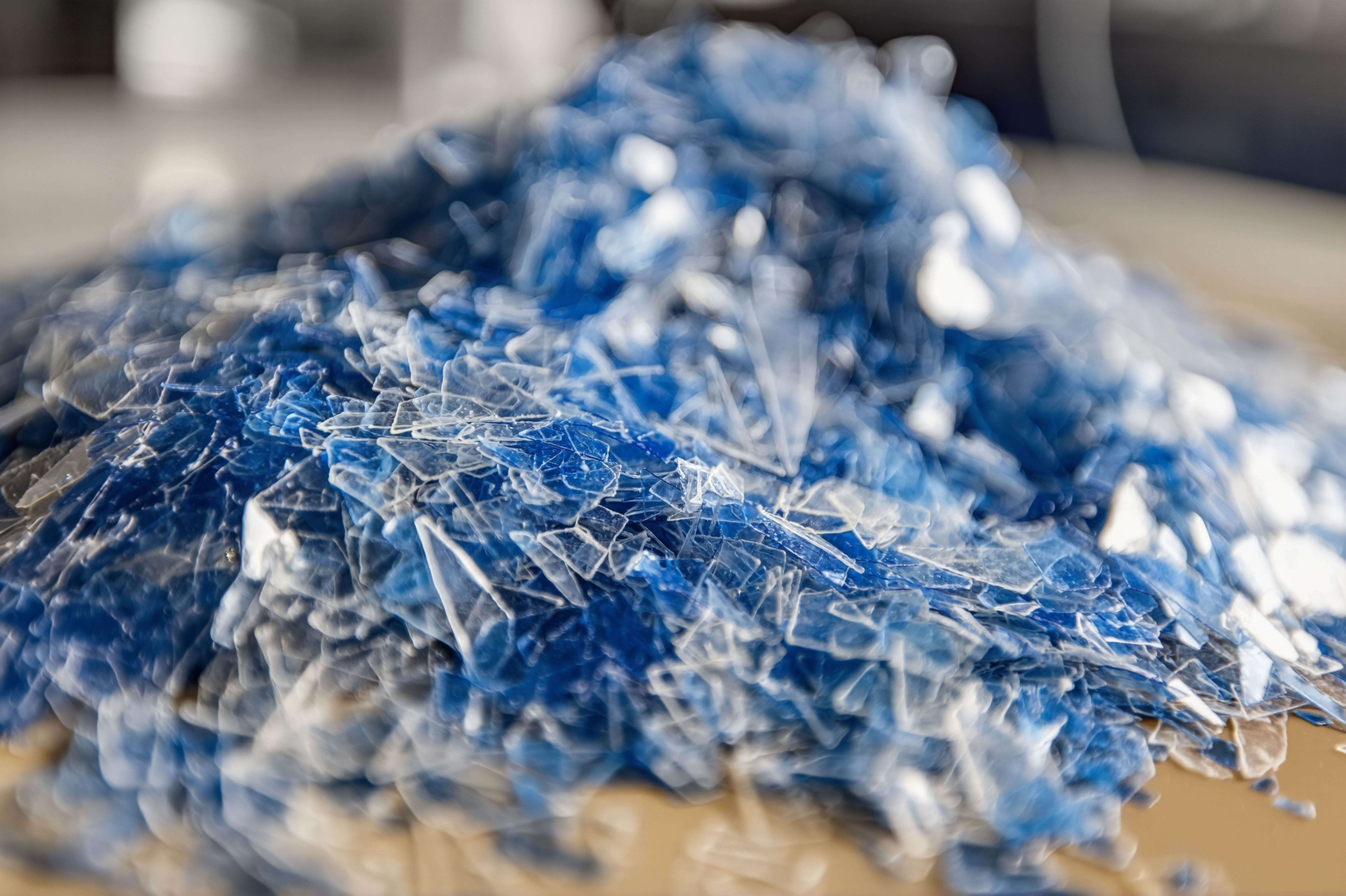
Once washed and separated from the silver, the PET granules become recycled PET plastic flakes, also known as rPET flakes. Because they come from medical X‑ray films, these flakes offer consistent, high quality from one batch to the next. Manufacturers use them as a raw material in many industries, including packaging, textiles, construction and automotive parts.
This is what makes radiograph recycling truly complete. The X‑ray films that sat in your archives for years don't end up in a landfill. They become new products, and the plastic they contain replaces virgin plastic that would otherwise have had to be produced.
Knowing what happens behind the scenes isn't just a matter of curiosity. It tells you whether your X‑ray films are truly in good hands.
First, it's a question of confidentiality. When every stage of the process takes place under one roof, your patients' information never passes through a third party. From the moment your X‑ray films arrive at our plant to the moment they become raw materials, they stay with Electrometal and are destroyed by our own team.
It's also a question of environmental responsibility. A recycler that recovers only the silver, or only part of the film, still sends waste to a landfill. Complete radiograph recycling recovers both the silver and the PET plastic, so that nothing from your archives is lost.
Finally, it's a question of value. Because the silver in your X‑ray films can be recovered and refined, your archives are worth something. At Electrometal, the pickup is free wherever your organization is located in the world, and we make you a purchase offer for your X‑ray films and MRI films.
Whether you have a few boxes of X‑ray films or an entire archive room of radiographs and MRI films, Electrometal can take care of them. We pick them up for free, destroy all patient data in-house and give both the silver and the plastic a second life.
Fill out our online form or give our team a call. We'll get back to you to talk about your X‑ray films and plan the pickup.


